Their story
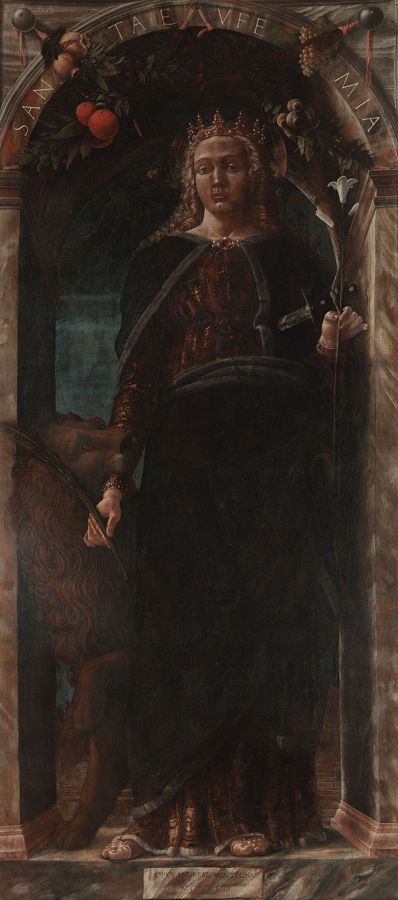
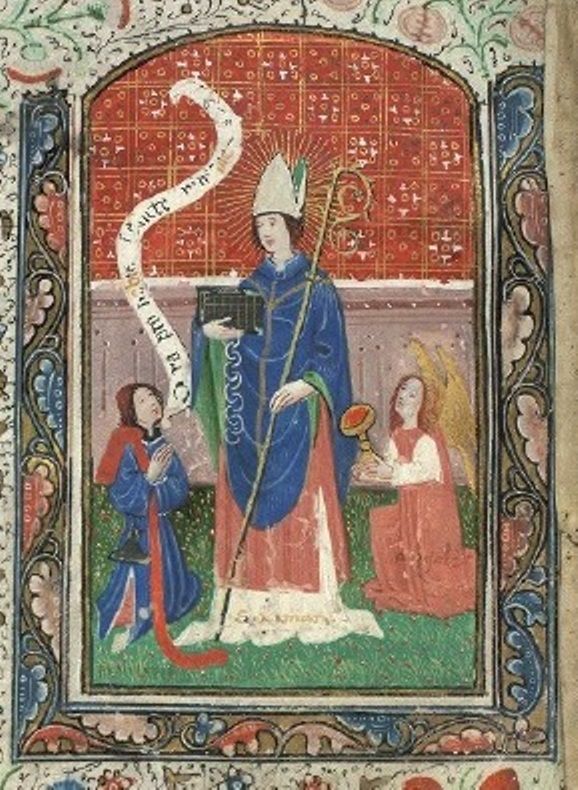
Lucia was a noble widow at Rome who was martyred under Dioclesian, together with Geminianus. Butler's entry is brief. Baring-Gould gives about 304.
Lucia was a noble widow at Rome who was martyred under Dioclesian, together with Geminianus.
Read the essentials →Lucia was a noble widow at Rome who was martyred under Dioclesian, together with Geminianus.
September 16
Not verified yet
Martyrs
Lucia was a noble widow at Rome who was martyred under Dioclesian, together with Geminianus. Butler's entry is brief. Baring-Gould gives about 304.
Diocletian ordered a pot of pitch to be boiled, and Lucia to be plunged in it. She was boiled in the pitch for three days, during all which time she sang hymns, and was quite unhurt. When Diocletian sent to make inquiries about her ashes, great was his amazement to hear that she was not dead.
Keep their day. Remember them on September 16 with a short prayer, and ask for their help.
Diocletian [Roman emperor 284–305, who began the ‘Great Persecution’ of Christians in 303] ordered a pot of pitch to be boiled, and Lucia to be plunged in it. She was boiled in the pitch for three days, during all which time she sang hymns, and was quite unhurt. When Diocletian sent to make inquiries about her ashes, great was his amazement to hear that she was not dead.
He then ordered her out of the pot, and to be led through the streets laden with chains. As she passed a house inhabited by a pagan named Geminianus, who had three thousand two hundred idols in his house which he adored, they all fell down and broke their necks, and Geminianus saw a dove descend from heaven and make the sign of the cross on his brow. Then he hasted to S. Lucia, and declared himself ready to believe in her religion; so he was committed to prison with her; and in the night S. Protasius, warned by an angel, came to the prison, and baptized him. And a river burst out of the prison-cell in which was Lucia, and swept away part of the city, and with it the palace of Diocletian.
And when the martyrs were brought before Gebal, the Imperial assessor, and Pyropogon, Governor of Rome, a man who was ordered to strike Lucia was turned to stone, with the exception of one arm, which remained flesh. Fire also fell from heaven, and consumed the Emperor to a cinder; but Lucia prayed over the cinder, and the Emperor got up, and recovered his rude health and activity, as if nothing had happened. But after he had ordered the martyrs to execution, as he was riding over a bridge, followed by an army, his horse jumped into the water, and he was drowned, as well as one thousand three hundred and forty -six soldiers, who jumped in after him to pick him out.
Feast: September 16
One short email a day for nine days. The day's prayer, a line from Sts. Lucia and Geminianus's story, and a nudge to keep going.
From Sabine Baring-Gould, The Lives of the Saints, new edition in 16 vols. (London: John C. Nimmo, 1897–98); text from the Internet Archive scan (OCR, lightly cleaned; errors possible). Public domain.
From Sabine Baring-Gould, The Lives of the Saints, new edition in 16 vols. (London: John C. Nimmo, 1897–98); text from the Internet Archive scan (OCR, lightly cleaned; errors possible). Public domain in the United States. Reproduced unedited, except for short bracketed notes in grey that we added to explain names and terms (“S.” is the old abbreviation for Saint). Some history and judgments reflect 19th-century scholarship.