N
St. Nicetas
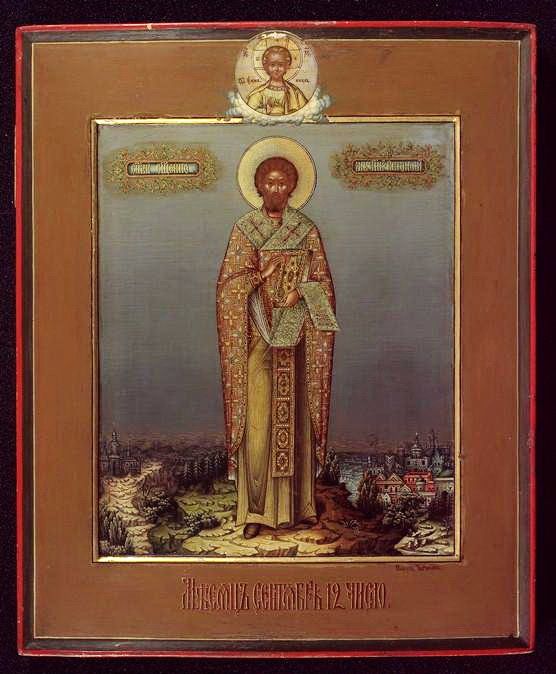
St. Autonomus
A
The governor, infuriated at what had been done, would have executed some of the principal inhabitants of the city, had not the three men who had done the deed delivered themselves
Read the essentials →The governor, infuriated at what had been done, would have executed some of the principal inhabitants of the city, had not the three men who had done the deed delivered themselves
September 12
Not verified yet
Feast
Thin entry · the 1897 book gives only 109 words. We have not filled the gap with invented detail.
The governor, infuriated at what had been done, would have executed some of the principal inhabitants of the city, had not the three men who had done the deed delivered themselves up. They were offered pardon if they would sacrifice; but on their refusal they were racked with a variety of torments, and lastly laid on gridirons, and slowly roasted over a charcoal fire. They are said by Socrates to have addressed the governor with the same taunt as that used by S. Lawrence,— “ If you wish to eat broiled flesh, Amachius, turn us on the other side also, lest we should appear but halfcooked to your taste.”
Keep their day. Remember them on September 12 with a short prayer, and ask for their help.
The governor, infuriated at what had been done, would have executed some of the principal inhabitants of the city, had not the three men who had done the deed delivered themselves up. They were offered pardon if they would sacrifice; but on their refusal they were racked with a variety of torments, and lastly laid on gridirons, and slowly roasted over a charcoal fire. They are said by Socrates to have addressed the governor with the same taunt as that used by S. Lawrence,— “ If you wish to eat broiled flesh, Amachius, turn us on the other side also, lest we should appear but halfcooked to your taste.”
Feast: September 12
One short email a day for nine days. The day's prayer, a line from Sts. Macedonius's story, and a nudge to keep going.
From Sabine Baring-Gould, The Lives of the Saints, new edition in 16 vols. (London: John C. Nimmo, 1897–98); text from the Internet Archive scan (OCR, lightly cleaned; errors possible). Public domain.
From Sabine Baring-Gould, The Lives of the Saints, new edition in 16 vols. (London: John C. Nimmo, 1897–98); text from the Internet Archive scan (OCR, lightly cleaned; errors possible). Public domain in the United States. Reproduced unedited, except for short bracketed notes in grey that we added to explain names and terms (“S.” is the old abbreviation for Saint). Some history and judgments reflect 19th-century scholarship.