N
St. Nicetas
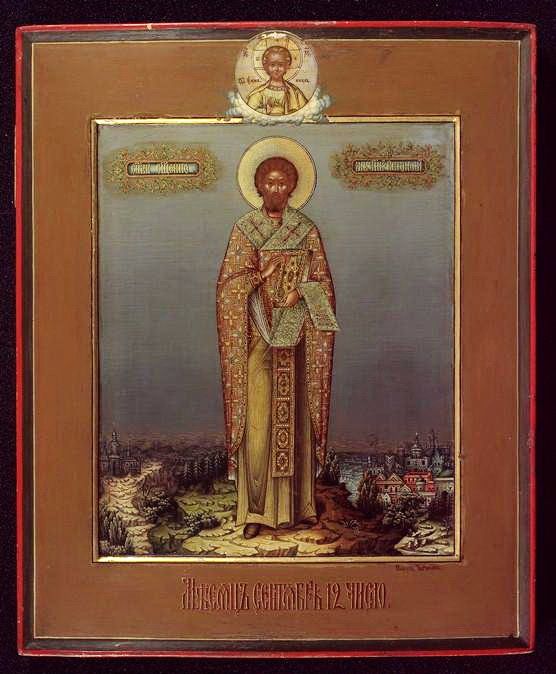
St. Autonomus
M
A shepherd who stayed with his people through hard times.
September 12
Not verified yet
Bishop
One day a huntsman lighted on the cave where the young wolves were, and was amazed to find among them a beautiful child. “When I was little and young and feeble thou didst nourish and cherish and protect me, and now that thou art old and grey and weak, shall I not render the same love and care to thee ?
Pray a little every day. Prayer runs all through this account.
Learn from the kind of life it was. A shepherd who stayed with his people through hard times.
One day a huntsman lighted on the cave where the young wolves were, and was amazed to find among them a beautiful child. He took it in his arms and carried it home, followed by the she-wolf, howling and snapping at his cloak. And long, long afterwards, when Ailbe was bishop, there was a great wolf-hunting party in Emly, and an old grey she-wolf, pursued by the huntsmen, tied to the bishop, and laid its head on his breast “ I will protect thee, old mother !” said the bishop, drawing his mantle round the aged beast. “When I was little and young and feeble thou didst nourish and cherish and protect me, and now that thou art old and grey and weak, shall I not render the same love and care to thee ? None shall injure thee. Come every day with thy little ones to my table, and thou and thine shall share my crusts.” And so it was. None ventured to lift a spear against the aged foster-mother of the bishop; and every day she and her little ones came to his hall, and sat, and ate what he gave them.
Ailbe, according to Tirechan, was ordained priest by S. Patrick [apostle of Ireland (5th century)]. When yet a heathen, his soul yearned for better S. Guido.
i S i things, and as, when keeping sheep, a Christian priest heard him praying with eyes uplifted to heaven for light and grace, he took the boy and taught and baptized him. Joscelin reckons Ailbe among the disciples of S. Patrick. * The legendary life, which unfortunately the Bollandists [Jesuit scholars who since the 1600s have critically studied the lives of the saints] have not printed, and which is yet, so far as I am aware, unpublished, contains many wonders. S. Ailbe wished once to give to the king of Munster a hundred horses; so he went to the top of a mountain, and prayed, and a cloud arose out of the sea, and came to the mountain top, and then burst, and from its womb issued a hundred noble steeds. The accurate annals both of Ulster and of Innisfallen place the death of Ailbe in the year a. d. 527,
Feast: September 12
One short email a day for nine days. The day's prayer, a line from St. Ailbe of Emly's story, and a nudge to keep going.
From Sabine Baring-Gould, The Lives of the Saints, new edition in 16 vols. (London: John C. Nimmo, 1897–98); text from the Internet Archive scan (OCR, lightly cleaned; errors possible). Public domain.
From Sabine Baring-Gould, The Lives of the Saints, new edition in 16 vols. (London: John C. Nimmo, 1897–98); text from the Internet Archive scan (OCR, lightly cleaned; errors possible). Public domain in the United States. Reproduced unedited, except for short bracketed notes in grey that we added to explain names and terms (“S.” is the old abbreviation for Saint). Some history and judgments reflect 19th-century scholarship.