St. Alban

Faithfulness to Christ when it cost everything.

Read the essentials →
June 21 · Martyr

St. Alban

St. Alban

Faithfulness to Christ when it cost everything.

Traditional feast

June 21
1914 / pre-1969 calendar, per Baring-Gould (1897)

Current feast

June 22 (also listed: June 20)
Secondary source · Wikipedia

Represents

Martyr

Their story

Adapted in modern English from Alban Butler's Lives of the Saints · Baring-Gould original below

Alban was a leading citizen of Verulam who had studied at Rome as a young man. Though not yet a Christian, he was hospitable. When the emperors' edicts were being enforced in Britain, he sheltered a fleeing clergyman, whom some writers call Amphibalus. Moved by the man's faith and constant prayer, Alban soon became a Christian himself.

Butler draws on Bede (the English monk-historian, d. 735), Gildas and the ancient Acts, and says Alban's death was made famous by many miracles. He was the first and most renowned of the British martyrs under Dioclesian, and the town of St. Alban's grew up beside the ruins of Verulam.

Butler gives the persecution of Dioclesian; Baring-Gould, the text on this page, gives the fifth century. The sources differ.

Early life

The book says little or nothing about early life. This is how the account begins.

Thin entry · the 1897 book gives only 88 words. We have not filled the gap with invented detail.

It is pretended that Alban was banished from Africa by Huneric, king of the Vandals, in 483, and that he retired to Mainz; but this is only a guess to account for the tradition of the martyr being a Moor. He is said to have been massacred by the Huns. In 804 a celebrated monastery was erected on the site of his martyrdom, and took his name.

What they represent

How they teach us to live

Drawn from themes in the original account

Make time for silence. Solitude and withdrawal to pray shape this life.

Build up the community you belong to. This life was lived with and for a community.

Learn from the kind of life it was. Faithfulness to Christ when it cost everything.
Read more

The full original · 88 words

Read Baring-Gould’s full account

Baring-Gould’s sources: German Martyrologies. Venerated at Mainz and Cologne. At Mainz also, on account of a translation, on December zst. Authority Tradition or legend of a very untrustworthy nature.] S. Alban is said to have been of Mauritanian origin, and his name must have been given to him in jest, for it is derived from Albus, white, whilst on account of his Moorish origin he must have had a dark complexion, somewhat astonishing to the Germans on the Rhine. The existence of Moorish soldiers at Roman stations on that river is proved by the discovery of a skull of a distinctly African type lately at Cologne, with Roman coins and pottery.

It is pretended that Alban was banished from Africa by Huneric, king of the Vandals, in 483, and that he retired to Mainz; but this is only a guess to account for the tradition of the martyr being a Moor. He is said to have been massacred by the Huns [nomadic invaders from Central Asia, led in the 5th century by Attila].

In 804 a celebrated monastery was erected on the site of his martyrdom, and took his name. Some hagiographers have confounded him with S. Alban of Verulam. His relics [the bodily remains of a saint, or objects they used, kept with honor] are preserved at Mainz, but some fragments at Cologne.

Feast days

Feast: June 22
Traditional: June 21

Nine days · Free

Pray the novena
with us.

One short email a day for nine days. The day's prayer, a line from St. Alban's story, and a nudge to keep going.

Also on June 21
St. Eusebius of Samosata

St. Eusebius of Samosata

June 21 · Bishop
M

St. Maen

June 21 · Abbot
L

St. Leutfried

June 21 · Abbot
← All 1726 saints in the library
Sources & notes

Feast-day sources

Story sources

Sources

Credits

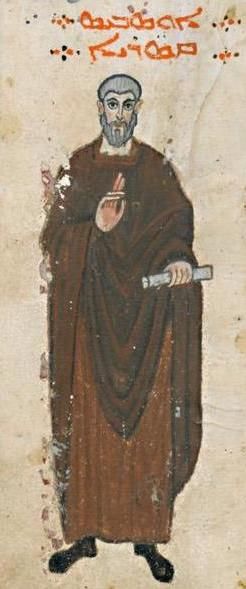
Image: Saint Alban (cropped).jpg · DaveWebster14 · Public domain, via Wikimedia Commons

From Sabine Baring-Gould, The Lives of the Saints, new edition in 16 vols. (London: John C. Nimmo, 1897–98); text from the Internet Archive scan (OCR, lightly cleaned; errors possible). Public domain.

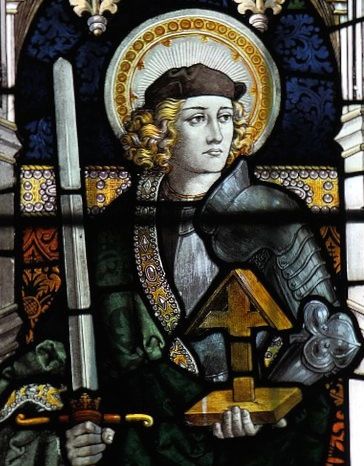
Image: DaveWebster14, Wikimedia Commons (Public domain)

From Sabine Baring-Gould, The Lives of the Saints, new edition in 16 vols. (London: John C. Nimmo, 1897–98); text from the Internet Archive scan (OCR, lightly cleaned; errors possible). Public domain in the United States. Reproduced unedited, except for short bracketed notes in grey that we added to explain names and terms (“S.” is the old abbreviation for Saint). Some history and judgments reflect 19th-century scholarship.