L

Building a community where people could actually live the Gospel.

Read the essentials →
June 21 · Abbot

St. Leutfried

St. Leutfried

Building a community where people could actually live the Gospel.

Traditional feast

June 21
1914 / pre-1969 calendar, per Baring-Gould (1897)

Current feast

Not verified yet

Represents

Abbot

Their story

Adapted in modern English from Baring-Gould (1897–98) · original text below

(The surviving account on this page begins partway through the story.)

Leutfried became a monk at St. Ouen about 674. On the advice of St. Ansbert, bishop of Rouen, he founded a monastery on the Eure near Evreux, where St. Ouen had raised a cross, later called Croix S. Leufroi.

A large community gathered round him. He was gentle but strict, refusing burial to a monk found to have broken his vow of poverty in small ways. Legend says he cursed the flies plaguing the refectory and they fell dead. He died in 738 after forty years as abbot, He was buried in the church of St. Paul that he had built, and later moved to the monastery of St. Croix. He is shown with flies or with children he teaches.

Early life

The book says little or nothing about early life. This is how the account begins.

Some time after, he entered the monastery of S. Ouen, under the direction of S. Sidonius, about 674. S. Ansbert, bishop of Rouen, entertained the highest esteem for S. Leutfried, and advised him to return to Evreux, and introduce the monastic order into that diocese. Leutfried obeyed, and having found a suitable spot on the banks of the Eure, at two leagues distance from Evreux, where S. Ouen had raised a wooden cross in memorial of a luminous cross he had seen there, built a chapel under the invocation of that holy prelate, and afterwards a monastery, which at first bore the name of Croix S. Ouen, but which was afterwards changed into Croix S. Leufiroi.
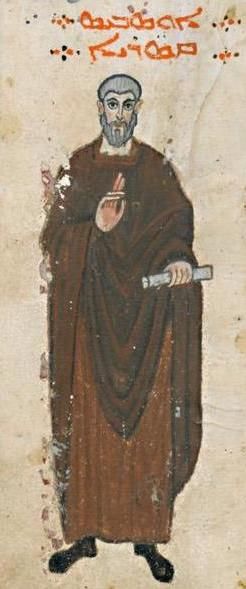
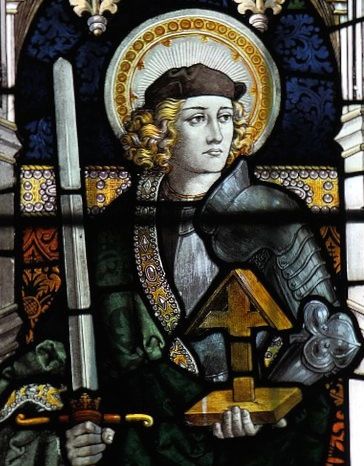
What they represent

How they teach us to live

Drawn from themes in the original account

Build up the community you belong to. This life was lived with and for a community.

Learn from the kind of life it was. Building a community where people could actually live the Gospel.

Read more

The full original · 271 words

Read Baring-Gould’s full account

Baring-Gould’s sources: Roman. G&Hican, and Benedictine Martyrologies. Authority: A life by an anonymous writer of the 9th cent.] Leutfried was sprung from a noble family at Evreux, in Normandy, and was educated in the abbey of S. Taurinius in that city. He ended his studies at Chartres. Then, renouncing the world, he built a hermitage, into which he forbade women to set foot, and spent his time in instructing children and poor ignorant people. Next the desire to go elsewhere came over him, and he rambled to Cailly, in the diocese of Rouen, where he placed himself under the direction of a holy solitary named Bertrand.

Some time after, he entered the monastery of S. Ouen, under the direction of S. Sidonius, about 674. S. Ansbert, bishop of Rouen, entertained the highest esteem for S. Leutfried, and advised him to return to Evreux, and introduce the monastic order into that diocese. Leutfried obeyed, and having found a suitable spot on the banks of the Eure, at two leagues distance from Evreux, where S. Ouen had raised a wooden cross in memorial of a luminous cross he had seen there, built a chapel under the invocation of that holy prelate, and afterwards a monastery, which at first bore the name of Croix S. Ouen, but which was afterwards changed into Croix S. Leufiroi. A numerous community assembled around this wise and holy founder. His gentleness was mingled with severity. When a brother died, and was discovered to have in some trifling particulars violated the holy vow of poverty, Leutfried refused to allow him sepulture.

He is said to have been favoured with the gift of miracles during his life. The refectory swarmed with flies one hot summer day, and gnats from the marshes stung and tormented his monks. The abbot is said to have uttered his malison, and instantly the floor of the refectory was strewn with the corpses of the troublesome insects.

He died in the year 738, after having exercised the function of abbot for forty years. He was buried in the church of S. Paul that he had built, but his body was afterwards translated to the monastery of S. Croix. In art he is represented with flies, or with children whom he is instructing.

Feast days

Feast: June 21

Nine days · Free

Pray the novena
with us.

One short email a day for nine days. The day's prayer, a line from St. Leutfried's story, and a nudge to keep going.

Also on June 21
St. Eusebius of Samosata

St. Eusebius of Samosata

June 21 · Bishop
St. Alban

St. Alban

June 21 · Martyr
M

St. Maen

June 21 · Abbot
← All 1726 saints in the library
Sources & notes

Feast-day sources

Story sources

Sources

Credits

From Sabine Baring-Gould, The Lives of the Saints, new edition in 16 vols. (London: John C. Nimmo, 1897–98); text from the Internet Archive scan (OCR, lightly cleaned; errors possible). Public domain.

From Sabine Baring-Gould, The Lives of the Saints, new edition in 16 vols. (London: John C. Nimmo, 1897–98); text from the Internet Archive scan (OCR, lightly cleaned; errors possible). Public domain in the United States. Reproduced unedited, except for short bracketed notes in grey that we added to explain names and terms (“S.” is the old abbreviation for Saint). Some history and judgments reflect 19th-century scholarship.