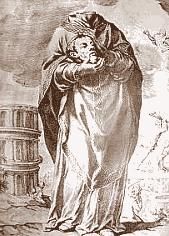
Baring-Gould’s sources: Roman Martyrology. Authority:—Victor of Utica. Hist. Persec. Vandalorum, lib. i.
Carthage was taken by Genseric king of the Vandals in October, 439, and then began that fearful Arian [followers of Arius, who taught that the Son is a created being, not fully God] persecution of the Catholics which almost surpassed those of the heathen emperors in horror. Bishop Quodvultdeus had been sent adrift along with his clergy in a broken vessel, and had been carried by the wind in safety to Naples. The church of Carthage was without a chief pastor for about fourteen years, till in 454, Deogratias was created bishop.
In 455, Genseric entered Rome, which he found undefended. Pope S. Leo met him at the gates and obtained from him that the city should not be burnt, nor should the inhabitants be massacred, but that the Vandal conquerors were to content themselves with the pillage. Rome was therefore pillaged deliberately during a fortnight, and then the Vandals retired carrying with them an immense treasure, amongst other things of value, the sacred vessels which Titus had taken from the temple of Jerusalem. They returned to Africa also encumbered with crowds of captives whom they sold to the Moors [the Muslims of North Africa and Spain] and amongst themselves. Wives were separated from their husbands, and children from their parents. The holy bishop, stirred to the depths of his soul by the misery that he saw, sold all the gold and silver vessels of the churches of Carthage, and spent the proceeds in redeeming those slaves whose cases were most urgent and distressing. And, because there was not found any other place sufficiently capacious to receive the ransomed multitude, he devoted to their accommodation the church of S. Fausta, and the new church, which he filled with straw and with beds. As there were many sick amongst this crowd, some who had suffered from sea-sickness, and others from the disorders consequent on being crowded together in small vessels, the holy prelate visited them at all hours, with medicines, and proper food, and ministered to their necessities with his own hands. He did not even rest at night, but walked up and down the churches visiting the beds, and seeing that order and comfort prevailed. The emergency gave the aged and decrepid man new strength. The Arians envious of his virtue, made several attempts on his life, but they failed. The labour and exhaustion consequent on this tax on his energies overcame him, and he died peaceably after having held the see only three years. He was secretly buried, whilst the Catholics were engaged in their churches at prayer, for fear lest the people, who loved him as a father, should carry off his revered body. After his death Genseric forbade the ordination of bishops in the whole proconsular province and in Zeugitania, where there were as many as sixty-four. Thus, by deaths and imprisonment, the number of Catholic bishops in thirty years was reduced to three.