G

Faithfulness to Christ when it cost everything.

Read the essentials →
February 27 · Martyr

St. Gelasius

St. Gelasius

Faithfulness to Christ when it cost everything.

Traditional feast

February 27
1914 / pre-1969 calendar, per Baring-Gould (1897)

Current feast

Not verified yet

Represents

Martyr

Their story

Adapted in modern English from Baring-Gould (1897) · original text below · little is known

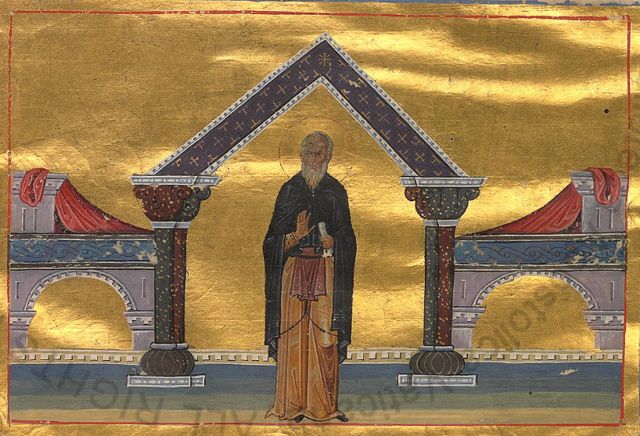
Gelasius was a comic actor in Heliopolis, in Phœnicia. During a stage mockery of Christian baptism he was dunked in a tub of water while another clown spoke the sacramental (a blessed object or action that disposes a person to grace, unlike a sacrament instituted by Christ) words.

He came up changed and declared, "I am a Christian; in the font I saw a dazzling light." When the audience realized he was serious, they rushed the stage and stoned him to death outside the theatre. Christians built a chapel over his tomb at Mariamnia, his home village.

Early life

The book says little or nothing about early life. This is how the account begins.

Thin entry · the 1897 book gives only 199 words. We have not filled the gap with invented detail.

Gelasius was a comic actor, the second clown of the theatre at Heliopolis, in Phœnicia. One day, on the stage was performed a parody of Christian rites for the amusement of the heathen spectators. A large bathing tub was introduced on the stage, filled with warm water, and the clown, Gelasius, was dipped in it, the other clown pronouncing over him the sacramental words.

What they represent

How they teach us to live

Drawn from themes in the original account

Give to people in need. The account records care for the poor.

Learn from the kind of life it was. Faithfulness to Christ when it cost everything.

Read more

The full original · 199 words

Read Baring-Gould’s full account

Baring-Gould’s sources: Greek Menæa. Authority:—The Chronicon Alexandrinum, or Chron. Paschale, under date 269 from the Ascension, which is equivalent to 297 of the vulgar era. In this Chronicle he is called Gelasinus. Theodoret may, perhaps, allude to him, when he says that some have passed from the stage of the theatre to the ranks of the martyrs. Du curand Græc. Affect., Serm. 8. Much the same circumstances are related of S. Genesius (Aug. 25th), who suffered about 286, unless both are the same; Gelasius in the West becoming Genesius by a slight change of liquids.

Gelasius was a comic actor, the second clown of the theatre at Heliopolis, in Phœnicia. One day, on the stage was performed a parody of Christian rites for the amusement of the heathen spectators. A large bathing tub was introduced on the stage, filled with warm water, and the clown, Gelasius, was dipped in it, the other clown pronouncing over him the sacramental words. When he rose from the bath, and was vested in white, it was observed that a change had come over him; the jesting air and laugh were gone, and a solemn expression had overspread his countenance. "I am a Christian," said he; "in the font I saw a dazzling light. Therefore, I will die as a Christian." As soon as the audience became aware that he spoke in sober earnest, the theatre became a scene of wild tumult, the people deserted their seats, and rushed on the stage, and dragged the poor actor forth, clothed in his white robe, and stoned him to death outside the theatre. His body was transported to the village of Mariamnia, near Heliopolis, of which he was a native, and an oratory was erected by the Christians over his tomb.
Feast days

Feast: February 27

Nine days · Free

Pray the novena
with us.

One short email a day for nine days. The day's prayer, a line from St. Gelasius's story, and a nudge to keep going.

Also on February 27
Sts. Julian, Chronion and Besas

Sts. Julian

February 27 · Martyrs
St. Honorina

St. Honorina

February 27 · Virgin, Martyr
St. Thalelæus

St. Thalelæus

February 27 · Hermit
← All 1726 saints in the library
Sources & notes

Feast-day sources

Story sources

Sources

Credits

From Sabine Baring-Gould, The Lives of the Saints, new edition in 16 vols. (London: John C. Nimmo, 1897), digitized text from Project Gutenberg. Public domain.

From Sabine Baring-Gould, The Lives of the Saints, new edition in 16 vols. (London: John C. Nimmo, 1897), digitized text from Project Gutenberg. Public domain in the United States. Reproduced unedited, except for short bracketed notes in grey that we added to explain names and terms (“S.” is the old abbreviation for Saint). Some history and judgments reflect 19th-century scholarship.