H

In despair Hrosnata vowed to go to Jerusalem, but losing heart, he bought a dispensation in Rome.

Read the essentials →
July 14 · Martyr

St. Hrosnata

St. Hrosnata

In despair Hrosnata vowed to go to Jerusalem, but losing heart, he bought a dispensation in Rome.

Traditional feast

July 14
1914 / pre-1969 calendar, per Baring-Gould (1897)

Current feast

Not verified yet

Represents

Martyr

Their story

Adapted in modern English from Baring-Gould (1897–98) · original text below

(The surviving account on this page begins partway through the story.)

In despair Hrosnata vowed to go to Jerusalem, but losing heart, he bought a dispensation in Rome. Pope Ccelestine (Celestine) required him to found a Norbertine monastery instead, and he built it in a loop of the river Toppel.

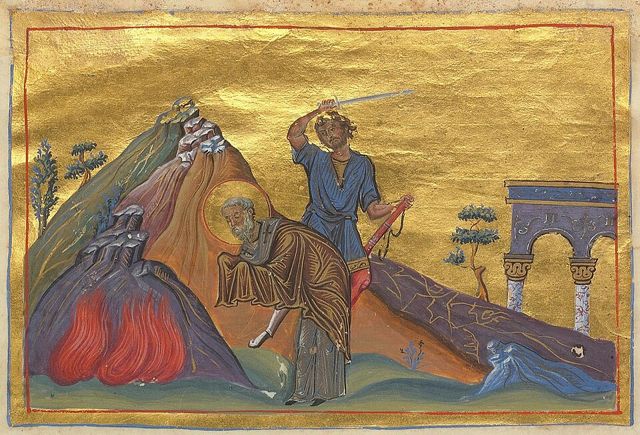
He founded other houses, including a nunnery for his widowed sister, then became a monk there. The abbot John resented him and drove him out, until Hrosnata's relatives forced an apology. Later, enemies, perhaps relatives unhappy at his gifts to the Church, seized him while he inspected abbey land, imprisoned and murdered him. The monks keep his body.

The site was shut in by woods but full of grass and flowers, with water for a mill and fish in the river. He also built a monastery of St. Wenceslas at Chotiessow. Baring-Gould calls the abbot mean-minded for resenting having the founder under him. The source does not say who his enemies were.

Struggles & surrender

What they wrestled with, and how they gave it to God

  • Ill-treatment and murder ·
    Source: Baring-Gould, Lives of the Saints. The abbot John drove Hrosnata from his own foundation, and later enemies imprisoned and murdered him.

Early life

The book says little or nothing about early life. This is how the account begins.

In the agony of his despondency he made a vow to go to Jerusalem, and he assumed the crusaders cross Lives 0/ the Saints. But his heart failing him, he went to Rome, and for a large sum of money, purchased a dispensation from his vow. Ccelestine, however, required him to build a monastery of Norbertines on his land, instead of going to Jerusalem.

What they represent

How they teach us to live

Drawn from themes in the original account

Build up the community you belong to. This life was lived with and for a community.

Keep their day. Remember them on July 14 with a short prayer, and ask for their help.

Read more

The full original · 332 words

Read Baring-Gould’s full account

Baring-Gould’s sources: Bohemian Martyrology; also that of the Norbertine Canons. Authority: — A Life written by a contemporary, a monk of Tbpl.] Hrosnata, a Bohemian noble at the court of Ottocar, king of Bohemia, had a wife whom he passionately loved, and a son, the delight of his eyes. The world smiled on Hrosnata; he was wealthy, respected by his king, happy in his family, and with a prospect of leaving his substance and title to his son. But man proposes, God disposes. The dear son fell sick and died, the mother died soon after, and Hrosnata found that all his hopes, his ambition, had turned to dust and ashes in his grasp.

In the agony of his despondency he made a vow to go to Jerusalem, and he assumed the crusaders cross Lives 0/ the Saints.

But his heart failing him, he went to Rome, and for a large sum of money, purchased a dispensation from his vow. Ccelestine, however, required him to build a monastery of Norbertines on his land, instead of going to Jerusalem. Accordingly, he chose a suitable spot, in a loop formed by the Toppel, which flows into the Egger. The place was shut in by dense woods, but was rich with grass and wild flowers, which made it charming to the eye. There was every convenience for a mill; the river abounded in fish. Soon the walls began to rise, slim pillars to be reared, the roofs to be spanned, and the merry bells to peal over wood and meadow.

Shortly after, he built a monastery in honour of S. Wenceslas at Chotiessow, and as his sister was left a widow at Cracow, and desired to retire from the world, he built her a nunnery; and then, taking the Norbertine habit, entered his foundation at Topi. But the abbot John, by no means pleased to have the founder and benefactor of the house under him, like all with mean minds, sought every opportunity of annoying and insulting him, till the intolerable treatment to which he was exposed, drove him from the house. He had recourse to his relations, and the abbot was humbled, chastised, and obliged with many apologies to receive back Hrosnata into the house. But Hrosnata had enemies. Whether they were hereditary ones of his own house, or relatives who grudged the donation of so large a portion of his goods to the Church, does not appear, but he was taken by them while inspecting the abbey property, thrown into a dungeon and murdered.

His body was recovered by the monks of Topi, and is preserved in their monastery to this day. Jnljr 14.1 5 1. Bonaventura.
Feast days

Feast: July 14

Nine days · Free

Pray the novena
with us.

One short email a day for nine days. The day's prayer, a line from St. Hrosnata's story, and a nudge to keep going.

Also on July 14
St. Phocas

St. Phocas

July 14 · Bishop, Martyr
V

St. Vincent Madelgar

July 14 · Confessor
D

St. Dentlin

July 14 · Confessor
← All 1726 saints in the library
Sources & notes

Feast-day sources

Story sources

Sources

Credits

From Sabine Baring-Gould, The Lives of the Saints, new edition in 16 vols. (London: John C. Nimmo, 1897–98); text from the Internet Archive scan (OCR, lightly cleaned; errors possible). Public domain.

From Sabine Baring-Gould, The Lives of the Saints, new edition in 16 vols. (London: John C. Nimmo, 1897–98); text from the Internet Archive scan (OCR, lightly cleaned; errors possible). Public domain in the United States. Reproduced unedited, except for short bracketed notes in grey that we added to explain names and terms (“S.” is the old abbreviation for Saint). Some history and judgments reflect 19th-century scholarship.