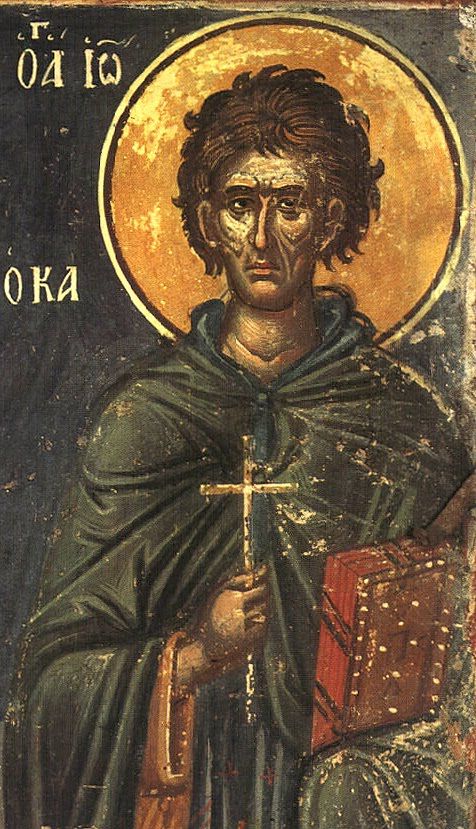
St. John the Calybite

Leaving everything to pray, yet still drawing people who needed wisdom.

Read the essentials →
January 15 · Hermit

St. John the Calybite

St. John the Calybite

Leaving everything to pray, yet still drawing people who needed wisdom.

Traditional feast

January 15
1914 / pre-1969 calendar, per Baring-Gould (1914)

Current feast

January 15
Secondary source · Wikipedia

Represents

Hermit

Their story

Adapted in modern English from Baring-Gould (1914) · original text below

John the Calybite is the Eastern counterpart of the Western St Alexis. As a boy he met a monk of the 'Sleepless Ones' and was so struck by what he heard of religious life that he wanted to enter it. He asked his wealthy parents for a book of the Gospels, and they, surprised he wanted a book rather than clothes or toys, bought him a beautifully illuminated copy. He read, 'He that loveth father and mother more than me, is not worthy of me,' and ran away from home to the Sleepless monastery at Gomon.

The abbot thought him too young and did not want to take him, but the boy persisted and was put through the monks' discipline. He stayed six years. Then a longing to see his parents came over him, and the superior said, 'Did I not say to thee, thou art too young. Go in peace to thy home.'

John went home but did not tell his parents who he was. He swapped clothes with a beggar and crouched at the gate of his father's house begging, and his father fed him every day from the kitchen. After a while his mother disliked having a filthy beggar at the door and had the servants move him to a little hut, which gave him the name Calybite, 'the hut-dweller'. Three years later, as he was dying, he sent for his mother and told her who he was. He was buried beneath the hut, and his parents built a church over his tomb.
Struggles & surrender

What they wrestled with, and how they gave it to God

  • Homesickness ·
    After six years in the monastery, a longing to see his father and mother again came over John, and he left. Returning home, he chose to live unrecognised as a beggar at his parents' gate rather than reclaim his old life.

Early life

Selected sentences from the original account, unaltered.

Returning home, he asked his parents, who were wealthy, to make him a present of the Holy Gospels. The archimandrite, or abbot, thinking him too young, objected to receive him, but when the boy persisted, he made him undergo the discipline of the monks.

What they represent

How they teach us to live

Drawn from themes in the original account

Feed your mind with Scripture and good books. Learning and the Scriptures matter in this life.

Learn from the kind of life it was. Leaving everything to pray, yet still drawing people who needed wisdom.

Read more

The full original · 335 words

Read Baring-Gould’s full account

Baring-Gould’s sources: Commemorated on the same day by Greeks and Latins. Some old Western Martyrologies honoured him on Feb. 27th. Authority, his life by Simeon Logotheta. [57]

S. John the Calybite is the Eastern counterpart of the Western S. Alexis. At an early age he met a monk of the Sleepless Ones, founded by S. Alexander, as mentioned in the immediately preceding life; and he was so struck with what he heard of the religious life, that he desired to enter it. Returning home, he asked his parents, who were wealthy, to make him a present of the Holy Gospels. They, surprised that the boy desired a book, instead of some article of dress or of play, purchased him a handsomely illuminated and illustrated book of the Gospels. The boy read, "He that loveth father and mother more than me, is not worthy of me." Then he ran away from home, and made his way to Gomon, where he entered the Sleepless order. The archimandrite, or abbot, thinking him too young, objected to receive him, but when the boy persisted, he made him undergo the discipline of the monks. He remained there, however, six years, and then a longing came over him to see his father and mother again; so he told the superior, who said, "Did I not say to thee, thou art too young. Go in peace to thy home." So John left the monastery. But returning home, he did not make himself known to his parents, but, changing clothes with a beggar, he crouched at the gate of his father's house and begged. Then his father gave him daily food from his kitchen; but after a while his mother, disliking the presence of a squalid beggar at the door, bade the servants remove him to a little cot, and thence he took his name of Calybite, or Cotter. Three years after, as he was dying, he sent for his mother, and revealed himself to her.

He was buried beneath the hut, and his parents built a church over his tomb.

Relics, in the church dedicated to him at Rome; his head at Besançon, in the church of S. Stephen.

Feast days

Feast: January 15

Nine days · Free

Pray the novena
with us.

One short email a day for nine days. The day's prayer, a line from St. John the Calybite's story, and a nudge to keep going.

Also on January 15
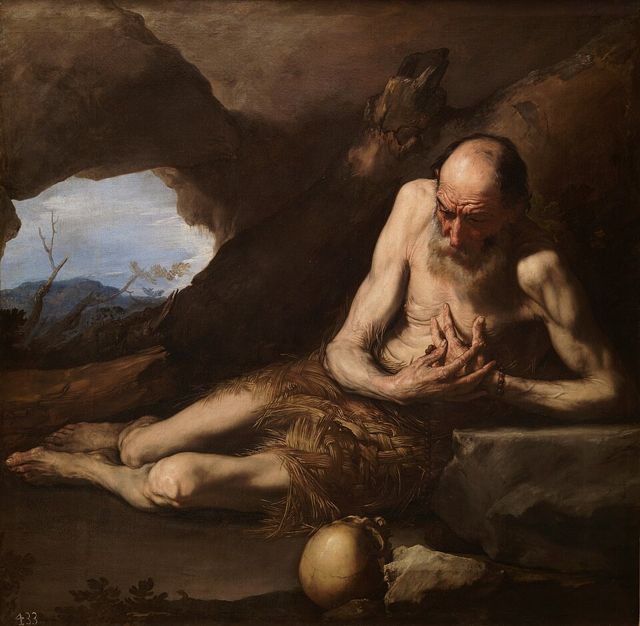
St. Paul, the First Hermit in Egypt

St. Paul

January 15 · Feast
St. Macarius of Egypt

St. Macarius of Egypt

January 15 · Abbot
I

St. Isidore of Alexandria

January 15 · Priest
← All 1726 saints in the library
Sources & notes

Feast-day sources

Story sources

Sources

Credits

Image: Athonite Fresco of Saint John Calabytes.jpg · Unknown authorUnknown author · Public domain, via Wikimedia Commons

From Sabine Baring-Gould, The Lives of the Saints, new and revised edition (Edinburgh: John Grant, 1914; first edition 1872). Public domain.

Image: Unknown authorUnknown author, Wikimedia Commons (Public domain)

From Sabine Baring-Gould, The Lives of the Saints, new and revised edition (Edinburgh: John Grant, 1914; first edition 1872). Public domain in the United States. Reproduced unedited, except for short bracketed notes in grey that we added to explain names and terms (“S.” is the old abbreviation for Saint). Some history and judgments reflect 19th-century scholarship.