Faithfulness to Christ when it cost everything.
July 14
Not verified yet
Martyr
Thin entry · the 1897 book gives only 130 words. We have not filled the gap with invented detail.
…reported from one person to another, and was exaggerated by popular rumour into a miracle of an astounding character — Liebert had been three days under water and quite dead. The prayer of the hermit had brought the corpse to the surface and inspired a new life into it. When grown older, Liebert entered the monastery founded by S. Rumbold, and became abbot.
Pray a little every day. Prayer runs all through this account.
Make time for silence. Solitude and withdrawal to pray shape this life.
Build up the community you belong to. This life was lived with and for a community.
Learn from the kind of life it was. Faithfulness to Christ when it cost everything.
…reported from one person to another, and was exaggerated by popular rumour into a miracle of an astounding character — Liebert had been three days under water and quite dead. The prayer of the hermit had brought the corpse to the surface and inspired a new life into it.
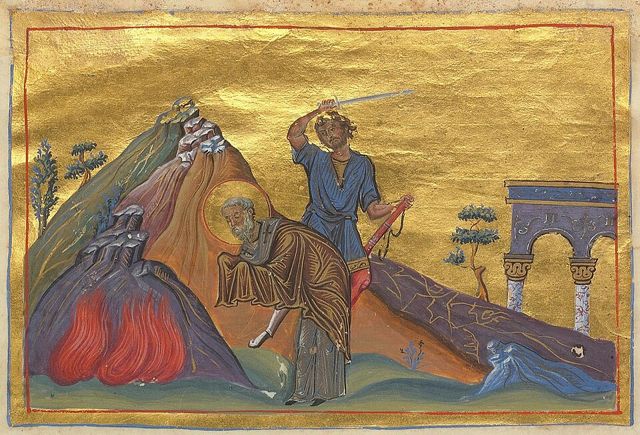
When grown older, Liebert entered the monastery founded by S. Rumbold, and became abbot. But the invasion of the Normans obliged him to fly and take refuge in Hesbain. The ferocious Northmen penetrated thither, and he was killed by them, at the foot of the altar of S. Tron. His relics [the bodily remains of a saint, or objects they used, kept with honor] are preserved there; some also at Mechlin. The relics at S. Tron had been lost or forgotten; but were discovered in 1169. Those at Mechlin were brought thither in 1631.
Feast: July 14
One short email a day for nine days. The day's prayer, a line from St. Liebert's story, and a nudge to keep going.
From Sabine Baring-Gould, The Lives of the Saints, new edition in 16 vols. (London: John C. Nimmo, 1897–98); text from the Internet Archive scan (OCR, lightly cleaned; errors possible). Public domain.
From Sabine Baring-Gould, The Lives of the Saints, new edition in 16 vols. (London: John C. Nimmo, 1897–98); text from the Internet Archive scan (OCR, lightly cleaned; errors possible). Public domain in the United States. Reproduced unedited, except for short bracketed notes in grey that we added to explain names and terms (“S.” is the old abbreviation for Saint). Some history and judgments reflect 19th-century scholarship.