It was an ancient custom observed by churches to keep an annual feast of the consecration of their bishops, and especially of the founding of the episcopate in them.
Read the essentials →It was an ancient custom observed by churches to keep an annual feast of the consecration of their bishops, and especially of the founding of the episcopate in them.
January 18
Not verified yet
Feast
That S. Peter founded the church at Rome by his preaching is expressly asserted by Caius, an ecclesiastical writer born about a.d. 202, [73] who relates that he and S. Paul suffered there.
Keep their day. Remember them on January 18 with a short prayer, and ask for their help.
It was an ancient custom observed by churches to keep an annual feast of the consecration of their bishops, and especially of the founding of the episcopate in them. The feast of S. Peter's Chair is the commemoration of the institution of the patriarchal see of Rome [a bishop’s “see” is his diocese, named from his seat (Latin sedes)] by S. Peter, the Prince of the Apostles. "This day," says S. Augustine (Serm. xv. de Sanctis), "has received the name of the Chair from our predecessor, because S. Peter, the first of the Apostles, is said on this to have taken the throne of his episcopate. Rightly, therefore, do the churches venerate the natal day of that chair which the Apostle received for the good of the churches."
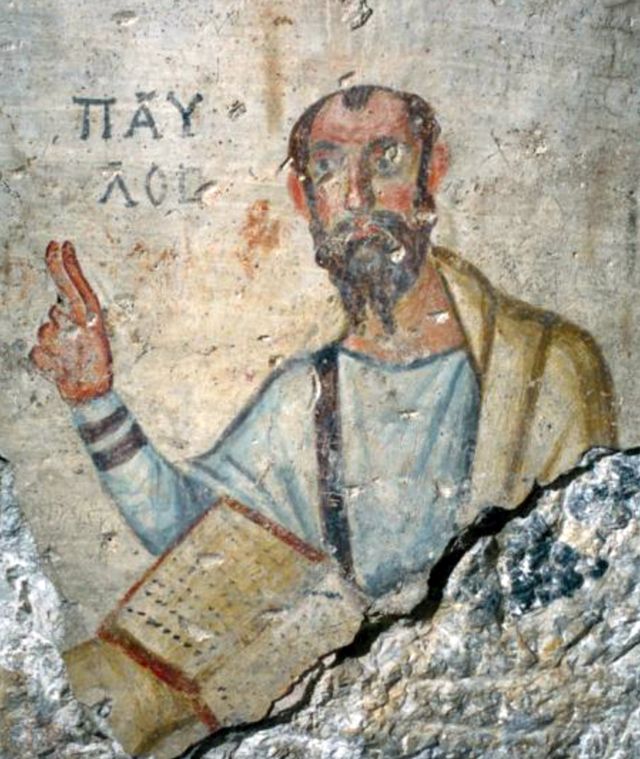
The ancient wooden seat of S. Peter is preserved in the Vatican. That S. Peter founded the church at Rome by his preaching is expressly asserted by Caius, an ecclesiastical writer born about a.d. 202, [73] who relates that he and S. Paul suffered there. The same is affirmed by Dionysius, Bishop of Corinth, in the second age. [74] S. Irenæus, who lived in the same age, calls the Church of Rome "the greatest and most ancient church, founded by the two glorious Apostles, Peter and Paul." [75] Eusebius [Eusebius of Caesarea (d. c. 339), the first historian of the Church] says, "Peter, that powerful and great Apostle, like a noble commander of God, fortified with divine armour, bore the precious merchandise of the revealed light from the east to those in the west, and came to Rome, announcing the light itself, and salutary doctrine of the soul, the proclamation of the kingdom of God." [76] And he adds that his first epistle was said to have been composed at Rome, and that he shows this fact, by calling the city by an unusual trope, Babylon; thus, "The Church of Babylon, elected together with you, saluteth you." (1 Pet. v. 13. [77] )
Feast: January 18
One short email a day for nine days. The day's prayer, a line from St. Peter's Chair at Rome's story, and a nudge to keep going.
From Sabine Baring-Gould, The Lives of the Saints, new and revised edition (Edinburgh: John Grant, 1914; first edition 1872). Public domain.
From Sabine Baring-Gould, The Lives of the Saints, new and revised edition (Edinburgh: John Grant, 1914; first edition 1872). Public domain in the United States. Reproduced unedited, except for short bracketed notes in grey that we added to explain names and terms (“S.” is the old abbreviation for Saint). Some history and judgments reflect 19th-century scholarship.