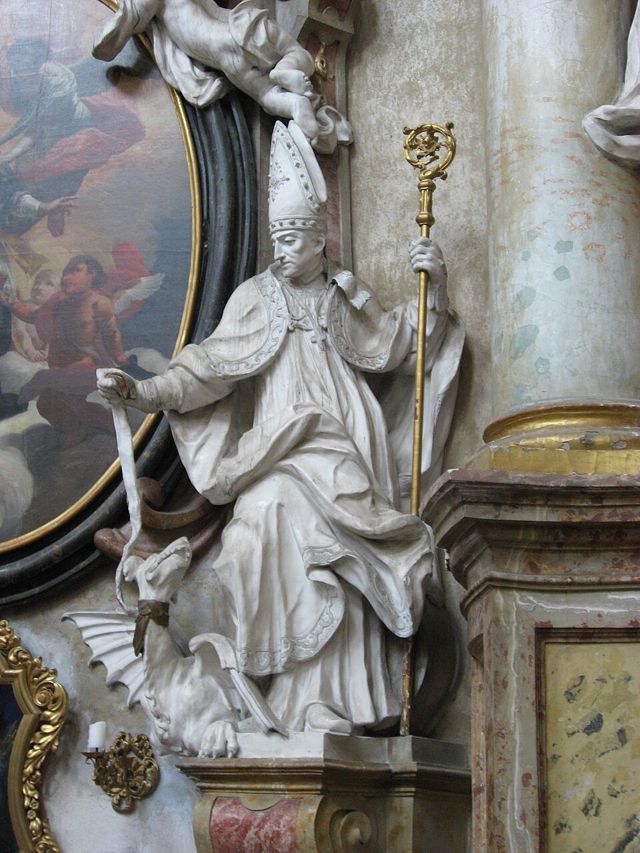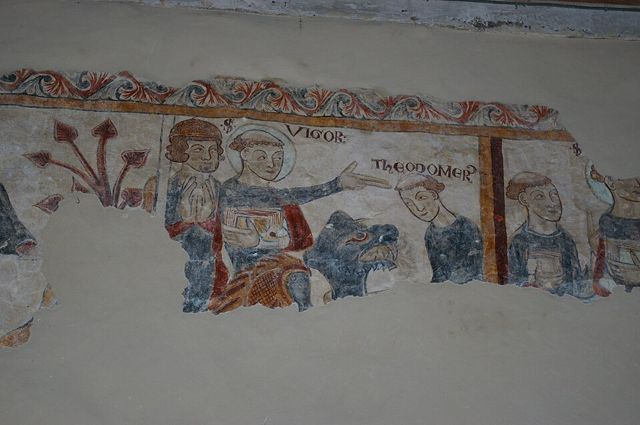
St. Vigor of Bayeux

A shepherd who stayed with his people through hard times.

Read the essentials →
November 1 · Bishop

St. Vigor of Bayeux

St. Vigor of Bayeux

A shepherd who stayed with his people through hard times.

Traditional feast

November 1
1914 / pre-1969 calendar, per Baring-Gould (1897)

Current feast

November 1
Secondary source · Wikipedia

Represents

Bishop

Early life

The book says little or nothing about early life. This is how the account begins.

Thin entry · the 1897 book gives only 0 words. We have not filled the gap with invented detail.

What they represent

How they teach us to live

Drawn from themes in the original account

Learn from the kind of life it was. A shepherd who stayed with his people through hard times.

Keep their day. Remember them on November 1 with a short prayer, and ask for their help.

Read more

The full original · 0 words

Read Baring-Gould’s full account

Baring-Gould’s sources: Roman and Gallican Martyrologies, Usuardus, &c. At Coutances and Arras on Nov. 3; but at Bayeux on Nov. 5. Authority: — A Life by S. Vigor was bom in Artois. His parents, illustrious by their birth, were more ennobled by their sanctity of life. They gave their son Vigor to S. Vedast, Bishop of Arras, to be by him educated; but not for the ministry. Vigorf fearing lest his father should insist on his marrying, and continuing the family honours, ran away with one companion named Theodemir, and concealed himself at Ravifere, a little village near Bayeux. There he preached, and having received priests’ orders, ministered the sacraments to the people. He is said to have restored a child to life whom he had baptized, and who died shortly after his baptism. He healed the sick, opened the ears of the deaf and the eyes of the blind. Of course, of him, as of most other bishops of an early age, the story is told that he killed a monstrous serpent or dragon. On the death ofS. Contestus, in 513, Vigor was elected in his place to the vacant see of Bayeux. Near the city stood a hill called Phaunus, on which was a stone figure of a woman to which the peasants offered religious rites.1 It stood on a royal domain. S. Vigor obtained the property from King Childebert, destroyed the idol, erected a church on the spot, and called the hill Mons Chrismatis, the Mount of Unction. Count Bertulf invaded the domain given to the bishop. Vigor entered the church, prayed, and received the satisfactory information that the Count had fallen off his horse, and broken his neck. S. Vigor founded the monastery of Cerare, which was afterwards destroyed by the Normans. He died at an advanced age, full of merits, on the 1st of November. His relics were translated to the cathedral of Bayeux, but afterwards were carried to the monastery of S. Riquier, in Ponthieu. A portion was given in 1671 to the monastery of S. Vigor, near Bayeux, and this is still preserved in the monastery church, now converted into a parish church. 1 Like the so-called Venus of Quiniply.

Feast days

Feast: November 1

Nine days · Free

Pray the novena
with us.

One short email a day for nine days. The day's prayer, a line from St. Vigor of Bayeux's story, and a nudge to keep going.

Also on November 1
M

St. Mary

November 1 · Virgin, Martyr
A

St. Austremonius

November 1 · Bishop, Martyr
St. Marcellus of Paris

St. Marcellus of Paris

November 1 · Bishop
← All 1727 saints in the library
Sources & notes

Feast-day sources

Sources

Credits

Image: Fresque 3 St Vigor Neau.JPG · MontdErve · Public domain, via Wikimedia Commons

From Sabine Baring-Gould, The Lives of the Saints, new edition in 16 vols. (London: John C. Nimmo, 1897–98); text from the Internet Archive scan (OCR, lightly cleaned; errors possible). Public domain.

Image: MontdErve, Wikimedia Commons (Public domain)

From Sabine Baring-Gould, The Lives of the Saints, new edition in 16 vols. (London: John C. Nimmo, 1897–98); text from the Internet Archive scan (OCR, lightly cleaned; errors possible). Public domain in the United States. Reproduced unedited, except for short bracketed notes in grey that we added to explain names and terms (“S.” is the old abbreviation for Saint). Some history and judgments reflect 19th-century scholarship.