Our Lady's medal
Pray the novena →In 1830, a young nun in Paris named Catherine Labouré said Mary showed her a design for a medal and promised great graces to those who wore it. Millions of medals later, it is one of the most popular Catholic devotions in the world.
November 27
Conversion
Healing
Protection
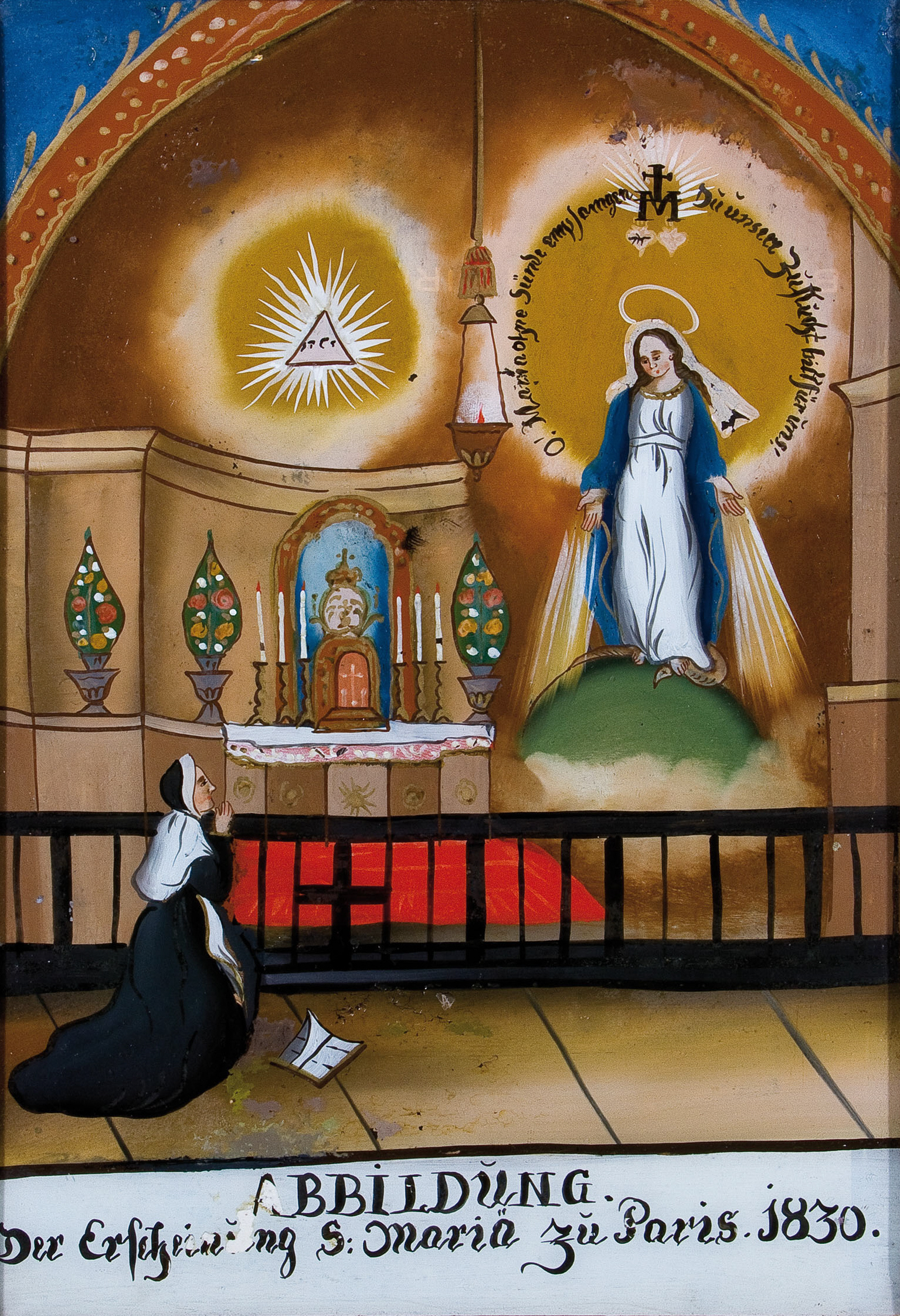
In 1830, Catherine Labouré, a novice of the Daughters of Charity at the Rue du Bac in Paris, reported apparitions of the Virgin Mary, who asked that a medal be struck. The medal, bearing the words 'O Mary, conceived without sin, pray for us who have recourse to thee,' was first made in 1832. Catherine was canonized in 1947. The feast of November 27 is kept by the Vincentian family rather than the whole Church.
The medal's original name was the Medal of the Immaculate Conception; people called it 'miraculous' after reported cures.
Its 1830 prayer came before the dogma of the Immaculate Conception was defined in 1854.
Catherine Labouré told almost no one she was the visionary until shortly before her death in 1876.
A novena is nine days of prayer for one intention, modeled on the nine days the apostles and Mary prayed between the Ascension and Pentecost (Acts 1–2). Pray this each day:
One short email a day for nine days. The day's prayer, a line from Miraculous Medal's story, and a nudge to keep going.
[Affiliate placeholder: Catholic Company Novena to Our Lady of the Miraculous Medal medal]
“O Mary, conceived without sin, pray for us who have recourse to thee.”
Image: Alois Gege (1795-1864), Seehausen am Staffelsee, Wikimedia Commons (Public domain)
The invocation on the Miraculous Medal (1830), public domain. Pray it daily for nine days with a Hail Mary, traditionally November 18–26.